How Local Culture Shapes the Walking Experience in the West of Ireland
Walking in the west of Ireland feels culturally rich because this guided route through Connemara, Inis Mór, and the Burren connects each day on the trail with living communities, archaeological sites, local stories, and distinct regional traditions.
In this article:
- Walk a Moderate to Energetic guided hike through Connemara, Inis Mór, and the Burren.
- Expect time in Clifden and Roundstone, a crossing to Inis Mór, and memorable walking near sites such as Dún Aonghasa and Poulnabrone dolmen.
- Travel with an Irish guide who adds local insight, cultural context, and route knowledge that would be easy to miss on an independent trip.
- Enjoy the structure of a guided holiday with transport between walks, daily luggage transfer, and comfortable accommodation that keeps the practical side straightforward.
Why This Route Stays With You
This 7-day guided Burren, Aran Islands and Connemara hike brings cultural detail into every day on the trail. You move through living communities, island traditions, archaeological sites, and landscapes shaped by generations of work and story.
With an Irish guide leading the way across Connemara, Inis Mór, and the Burren, the practical side stays simple. Daily luggage transfer, transport between walks, and comfortable accommodation let you focus on the place itself.
That is what makes the route memorable. The west of Ireland rewards walkers who want more than views with language, music, farming traditions, and local history close to the trail.
Why This Guided West of Ireland Hike Feels So Culturally Rich
A cultural walking holiday in the west of Ireland is not just about passing through attractive landscapes. The experience is richer because the encounters matter as much as the scenery. Along the way, you move through Irish-speaking areas, old harbour settlements, stone-walled fields, and archaeological sites that still shape local identity.
The Burren, Aran Islands, and Connemara bring those layers together with unusual clarity. In one trip, you can hear Irish in local conversations, stand near megalithic tombs on open limestone, and finish the day in villages where music and community life still feel rooted rather than staged.
Three Regions, Three Layers of Living Culture
Each stop on this route reveals a different side of western Ireland. Connemara brings living Irish-speaking culture, Inis Mór adds island tradition and ancient stone, and the Burren shows how landscape and history sit closely together.
Connemara – Gaelic Villages and Open Bog
Clifden anchors the Connemara walking experience. It’s a compact town ringed by the Twelve Bens mountain range. You’ll find arts alongside traditional music scenes thriving in local pubs and galleries.
From there, the trail moves through one of Ireland’s largest Gaeltacht regions. The Irish language remains completely normal in daily life here, part of what makes Connemara distinct within the Galway Gaeltacht.
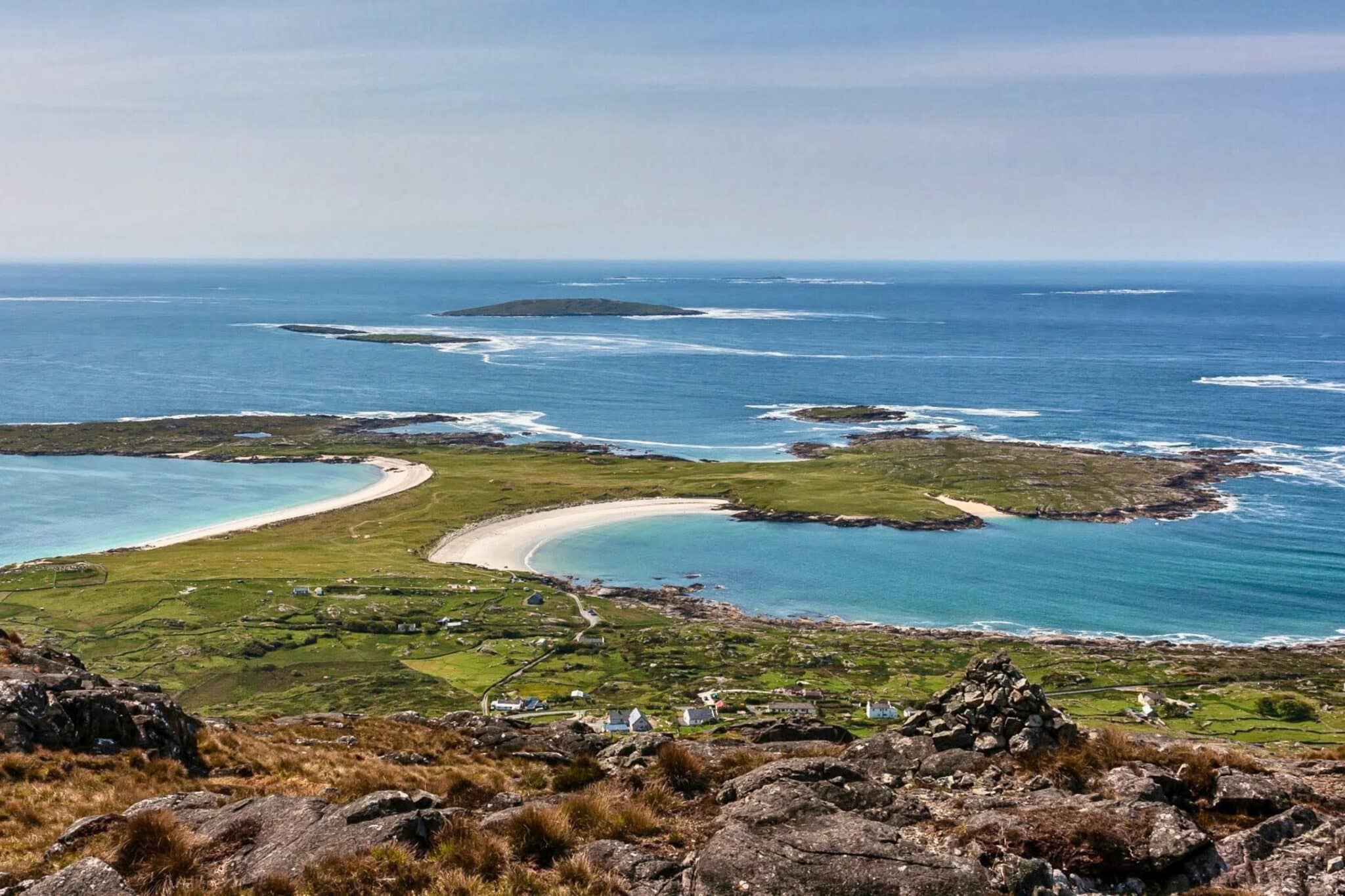
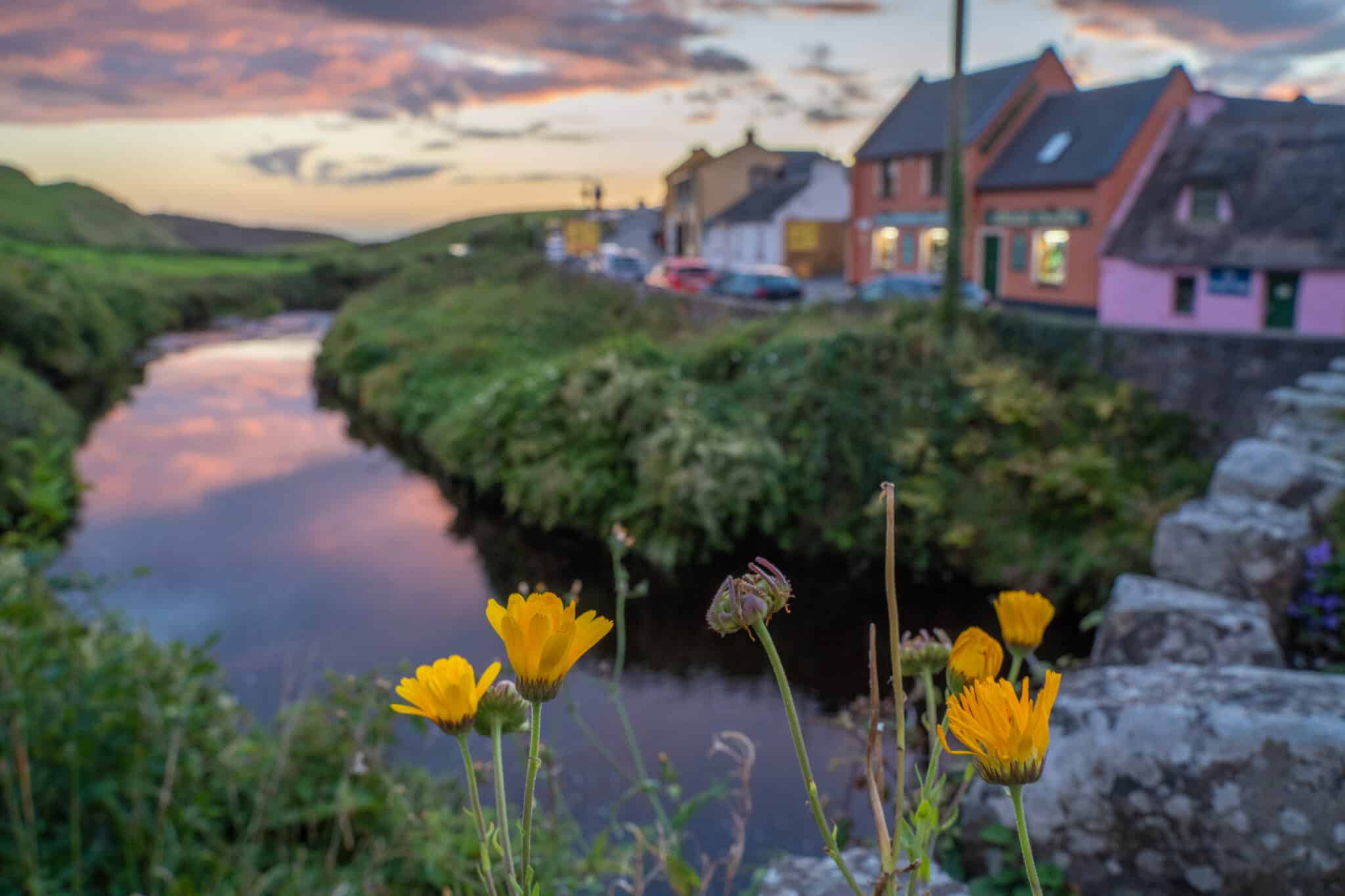
Roundstone sits on the coast south of Clifden. This fishing village holds deep associations with artists and writers. The harbour, light bouncing across Bertraghboy Bay, and unhurried rhythms of village life give walkers profound grounding.
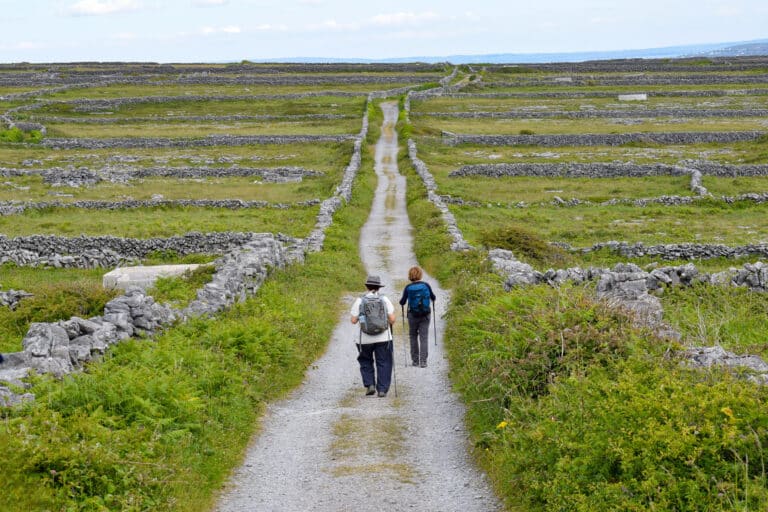
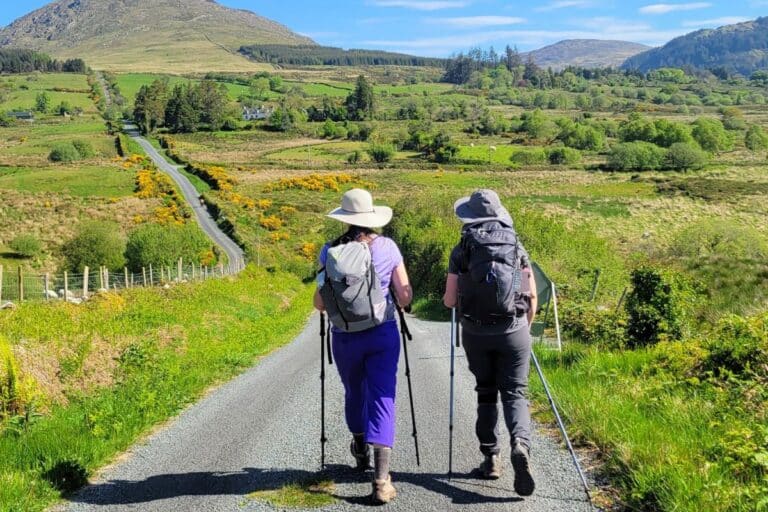
Connemara’s open bogland and mountain paths feel vast. But human presence remains constant. You’ll spot turf stacks, stone-walled fields, and brightly painted cottages at the end of narrow boreens.
Aran Islands – Island Community and Ancient Stone
Taking the ferry across to Inis Mór changes the scale of everything. The island is compact enough to explore entirely on foot. Its quiet lanes, stone-walled fields, and dramatic cliff edges create an environment of extraordinary compression.
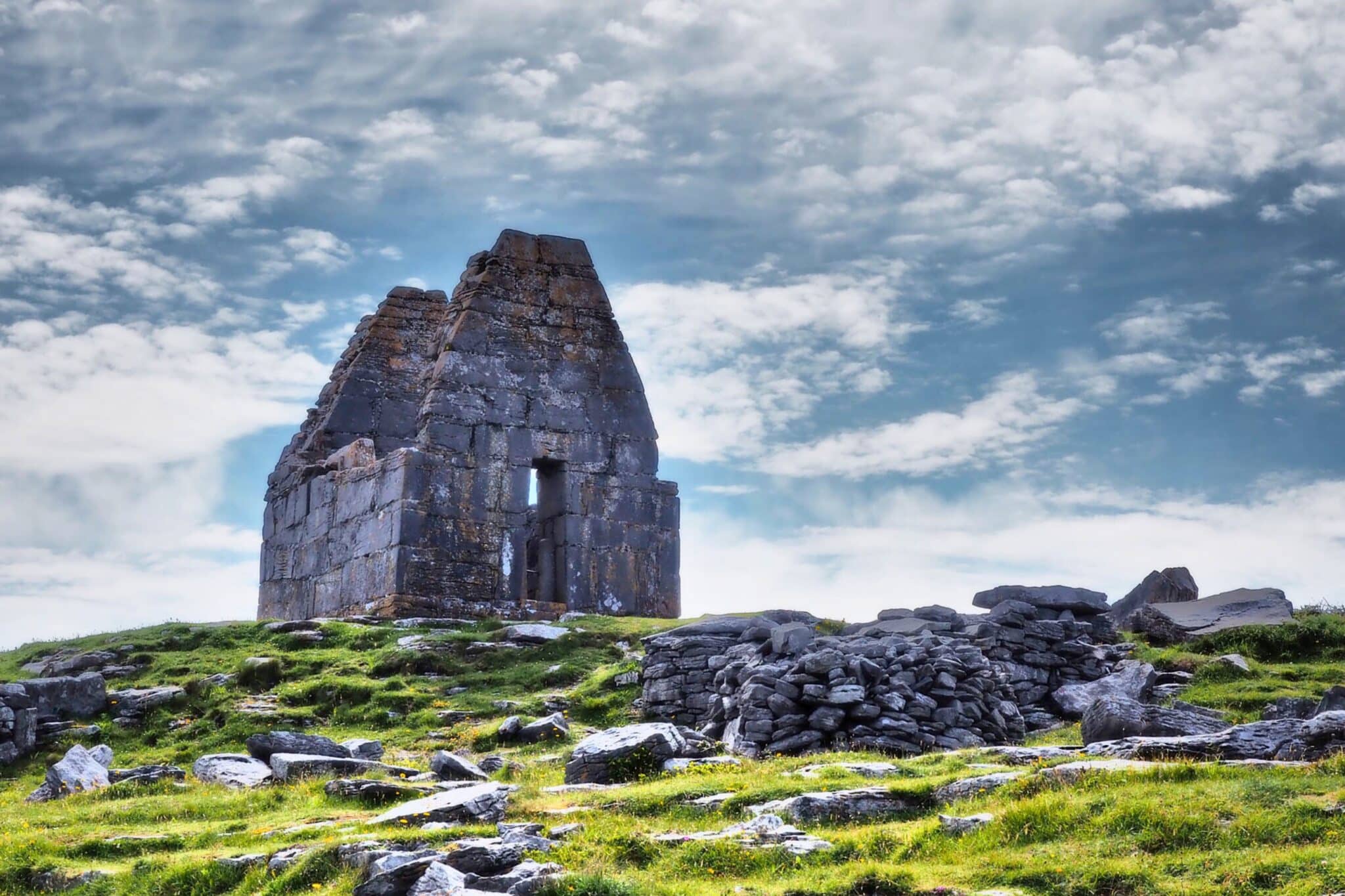
Dún Aonghasa is a prehistoric ring fort perched above sheer Atlantic drops. It stands out as the most striking single site on the route. Approaching on foot through fields grazed by cattle gives the fort a massive presence. No bus window view can ever replicate that feeling.
The Aran Islands remain deeply rooted in Gaelic-speaking communities. Traditional ways of living are highly visible in everyday routines. Islanders fish, farm, and speak Irish naturally. Silence and wind act as constant companions on your walk. The contrast with the mainland feels immediate. Arriving by boat and continuing on foot strips away the noise of modern travel. It leaves you with nothing but stone, sea, and sky.
The Burren – Ancient Paths and Agricultural Memory
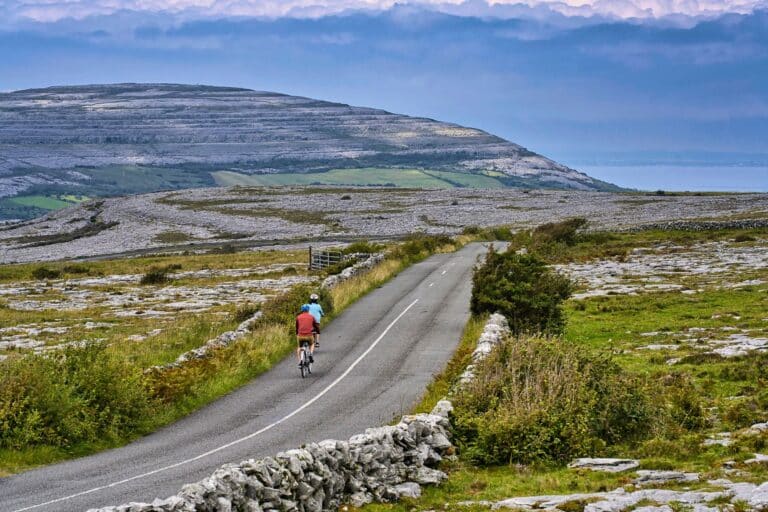
The Burren’s limestone pavement holds traces of human activity stretching back for millennia. Megalithic tombs, ring forts, and old green roads sit naturally within the walking landscape.
Poulnabrone dolmen is one of Ireland’s most photographed ancient monuments, standing proudly in open karst. You simply come upon it on foot while crossing the wider terrain.
Local flora adds another fascinating dimension, with plant communities thriving in the Burren’s limestone pavement and grykes, as outlined by Ireland’s National Parks and Wildlife Service.
Expert guides can explain why vastly different plant species grow side by side in the same limestone cracks. That kind of context turns strange environments into clearer ones. It gives walkers genuine reasons to slow down and look closely.
What Local Guides Add That a Map Cannot
Expert Irish guides do much more than set the pace. On our guided Burren, Aran Islands and Connemara hike, your leader actually translates the landscape. Here are some of the ways that local knowledge transforms what you see along the trail:
- Dry-stone walls point toward older patterns of labour and land use, revealing how communities divided and worked the ground across generations.
- Ruined cottages carry stories of emigration, offering a quiet but powerful reminder of the hardship that shaped the west of Ireland.
- Place names spoken in Irish often reflect local geography or the people who once lived there, adding meaning to every townland you pass through.
- Evening meals, music sessions, and local pub stops provide rich context from people who actually live and work in these places, not just perform for visitors.
How Small Groups Change the Experience
Keeping groups small (usually up to eight walkers) makes these conversations feel completely natural. Questions arise on the trail and are answered in real time. There are no megaphones or rigidly scripted stops. Your guide reads the group’s energy and adjusts the day accordingly.
They might pause at stunning viewpoints or press on toward villages where hot lunches are waiting. To get a sense of the people leading these walks, you can meet the guides behind our guided hikes and read about their backgrounds and local expertise before you book.
Evenings That Feel Rooted in Place
In Clifden, traditional music often shapes the evening atmosphere in local pubs. Across County Clare, those same music sessions remain core parts of community life. Sitting in the corner with your pint while fiddle players work through sets of reels is rarely staged.
Honestly, it’s just Tuesday. Food and drink are equally worth paying attention to, from freshly caught seafood in Connemara to soda bread served at farmhouse guesthouses along the Burren.
Choosing the Right Format and Grade for a Cultural Walking Holiday
This west of Ireland guided hike suits walkers who are comfortable with Moderate to Energetic days on mixed terrain. Expect a mix of:
- Limestone pavement
- Open hillside
- Coastal paths
- Quiet country lanes
Some sections will feel rougher or more demanding than others.
Moderate to Energetic days will suit regular walkers who are happy spending full days on varied surfaces. On guided holidays, the guide normally paces the group to the average walking speed, so the rhythm stays steady for walkers who match the trip’s expected level.
A guided format works especially well when cultural depth matters as much as distance. Accommodation, daily luggage transfers, and transport between walks are arranged for you, leaving more room to notice the details that make each place distinct.
If you are weighing up a guided or self-guided format, this overview of guided and self-guided walking holidays in Ireland clearly lays out the differences.
Where the Trail and the Culture Meet – A Walk Worth Taking Slowly
Many walking routes in western Ireland follow old drove roads, pilgrimage paths, and coastal tracks. Communities shaped these lines over centuries. Walking them with local knowledge is completely different from wandering alone with guidebooks. Stories, language, music, and food all sit right there along your trail.
They are just waiting for someone to point them out and explain why they matter. For a broader look at what historical walking tours in Ireland reveal about the country’s layered past, the IWHB blog covers the topic in useful depth.
If you want guided walking holidays in western Ireland that combine trails, culture, and local stories, Ireland Walk Hike Bike is a strong place to start. Tell us your preferred travel month and walking comfort level. We’ll recommend small-group departures that match your pace and interests. Get in touch to start the conversation.